
Colonists Justified Seizing Indigenous Lands by Invoking Terra Nullius. Was That Really OK?
What is terra nullius, when did it first arise and do we still adhere to this principle in our modern world?

A few years ago, I started down a road I had never taken before. As a retiree I was looking for ways to volunteer my time and give back to the society that had given me so much. Since the most recent years of my professional life were in the arena of helping people get money to do health research, I looked for places in healthcare to volunteer.
I ended up participating in the BC Patient Voices Network, as a member of their provincial council. And that led to my participating as a lay public member of a Core Oversight Committee for managing health research and internal grant funding at a local university.
That led to a part time paid position as a Research Navigator with the BC SUPPORT Unit at Fraser Health, one of British Columbia’s Strategy for Patient Oriented Research units formed to encourage healthcare researchers to include patients as partners on their research teams.
What exactly are patient partners?
Patient partners are not participants in a research clinical trial. They are not the people who volunteered to be included as participants/subjects in a clinical trial. Instead, they are members of the primary investigator’s team and their role is to help design and carry out the actual research and to ensure that it takes into account issues and concerns that patients want to see being addressed in the research being conducted.
As part of my training for this Navigator position, I was required to take an online course offered by the San’yas people: SAN’YAS ANTI-RACISM INDIGENOUS CULTURAL SAFETY TRAINING PROGRAM. Working through the units in this course opened my eyes to both the obvious and hidden racism and discrimination that Indigenous People experienced when seeking care in our healthcare system and got me started on my own path of reconciliation, decolonization and inclusion.
Once you start down the path of decolonization, you eventually come up against the concept of terra nullius. And once I did, I knew I had to learn more about this foundational concept that underlay all of settler colonialism emanating from the British Isles, Scandinavian and European nations. I wanted to know where it came from, how it arose, how it was applied and anything else I could.
I can’t help it, I’m a curious person and when something strikes my curiosity bone, I have to follow it up.
So that’s what I want to tell you about today.
Maybe this is the first time you’ve heard about it, maybe you’ve been exposed to it before. In either case, I invite you to join me in this exploration to see where it takes us and what we might learn to better understand and walk the path of decolonization and reconciliation.
And do so in a good way.
The Concept
One of the primary factors that underlies the occupation and claiming of land by European explorers in the 16th century and subsequent years was and still is the concept of terra nullius, a Latin phrase that is translated as “nobody’s land” or “land belonging to no one”.
Strangely enough, it wasn’t until I entered my 8th decade on this planet that I even heard the term. Not strangely enough, is once I heard it and learned what it meant, I realized that it underlay not only the occupation and seizure of Indigenous Lands throughout the world by colonizers but was also the foundation underlying my own personal white settler unconscious bias.
Terra nullius is the foundation that underlies my own personal white settler bias
I say unconscious because until I started down my own personal path of decolonization, reconciliation and inclusion a few years ago, I just assumed that any unoccupied lands without deeded ownership were lands that belonged to the local, regional or national government(s). I assumed if the land was owned it would have a sign, a structure on it or at the very least, a NO TRESPASSING sign to keep other people without the owner’s permission from using or occupying it in any way.
Because that was my upbringing in the 20th century.
If it wasn’t private property, it was government-owned property. And it certainly wasn’t owned by any Indigenous Peoples because where I grew up, if they owned it, it was part of their reservation and there would be signs delineating the borders of their reservation/land.
Does any of that ring true for you, too?
Back to terra nullius.
So where did this concept come from, how did it come to be accepted as part of international law, and why do we need to completely revisit the whole concept?
Ok, let’s get in the wayback machine and see what we can find out about the origins and assumptions that underlie terra nullius.
Unpacking the Historical Background
Since I’m now a fully retired person and spend most of my writing time on my computer at home, I often start my research with seeing what’s on Wikipedia about the topic.
The first thing that pops out for me on their Terra Nullius page is this:
In international law, terra nullius is territory which belongs to no state. Sovereignty over territory which is terra nullius can be acquired by any state by occupation.
Now that’s a real mouthful!
Let’s unpack it a bit, eh!?
“…territory which belongs to no state.”
Ok, I thought I knew what territory is; a designated area of the planet Earth whether it be land-based or water-based or some ecological niche or region that an animal is defending for its sustenance and survival.
But that’s not exactly correct.
What is territory?
Territory comes from the Latin word, territorium, which means land around a district and is derived from the root terra- which is land, and -torium, which is an extension of -tor from the Latin word praetor, which designated a Roman magistrate. A praetorium was the tent of a Roman general.
So staying with humans, a territory is defined as (1) a tract of land; region or district or (2) the land and waters belonging to or under the jurisdiction of a state, sovereign, or magistrate of a state etc. There are also many other definitions of territory but for now, these will suffice.
The crucial concept here is the “belonging to or under the jurisdiction of a state”.
So we have a bit of a conundrum in that if someplace is designated a territory, it should already be under the sovereign control of some governmentally designated or traditionally recognized state.
And that’s not always so simple either.
Here’s a current example that recently appeared in the news.
The state of Alaska in the USA just claimed governance over a region of the ocean by extending its state borders, due to mapping of the continental shelf underneath the water’s surface, to include certain parts of the continental shelf. Whether that will remain uncontested by other nations, say Canada, where there could be potential sovereignty overlapping is still being discussed.
Ok, I think now we know what terra is. Now we need to add the nullius part which in Latin means having no legal binding force.
So if I understand this correctly, combining the two gives us an area that is “under the jurisdiction of a state that has no legal binding force”. Or there is no jurisdictional legal binding force on that area of territory.
In a sense, this is an anti-territory because if it was true territory, it would be under the aegis of a sovereign state but since it has been nullified, and isn’t under any jurisdiction, it is non-territory which could be claimed and then called territory by the claimant.
As a Zen Buddhist, I would say that based on that information, terra nullius defines a not-territory territory. As in, since no one claims it, it isn’t a territory so it’s up for grabs.
Finders keepers.
Whew!
How’s that for ultimate privilege?!
I saw it first so it’s mine.
But is it?
As you can see, this is not as plain and simple as some folks would have you believe.
Staking a Claim
If you keep going back in human history, what you see is there are essentially two ways to get territory; it was either gifted to you by a spiritual being (a god, gods or other mythological beings) or you acquired and kept it by governmental military power.
To claim it as your own you had to live there and use it to sustain life. That is what all Indigenous Peoples did before the invasion of the European Explorers and White Settler Colonists.
And strangely enough, they were quite happy to do so. For thousands of years before the arrival of explorers and colonists, they occupied and maintained their peoples by living off the land and water and they did so in a sustainable and highly respectful way.
There were many different North and South American Indigenous groups and somehow, they managed to figure out which areas of land were ones they claimed for their own people and which ones were areas that they were willing to share with other Indigenous groups.
And like all humans everywhere, sometimes there were disagreements and battles were fought over these disputed areas to settle who had access to what.
That’s a whole nother arena which we’re not going to talk about today.
Anyhow, for me to assume that I really know much of anything about how they worked their disagreements out over all those millennia is more than a bit arrogant, to say the least.
So let’s just say this; Indigenous Peoples the world over did lay “claim” to certain demarcated areas of land and water that were recognized by other Indigenous neighbours. And as all Indigenous Peoples, as far as I know, have some kind of governing leadership with either one main person, a council, or a combination of the two, we can say that they had sovereignty over that land.
But that’s specifically what wasn’t respected. And to understand that, we need to go back over the ocean to where and when the explorers and colonists came from to understand why they didn’t recognize that.
Gift of God
In Canada and the United States, ultimately, it has its origins in religious biases and prejudice.
Specifically Christianity.
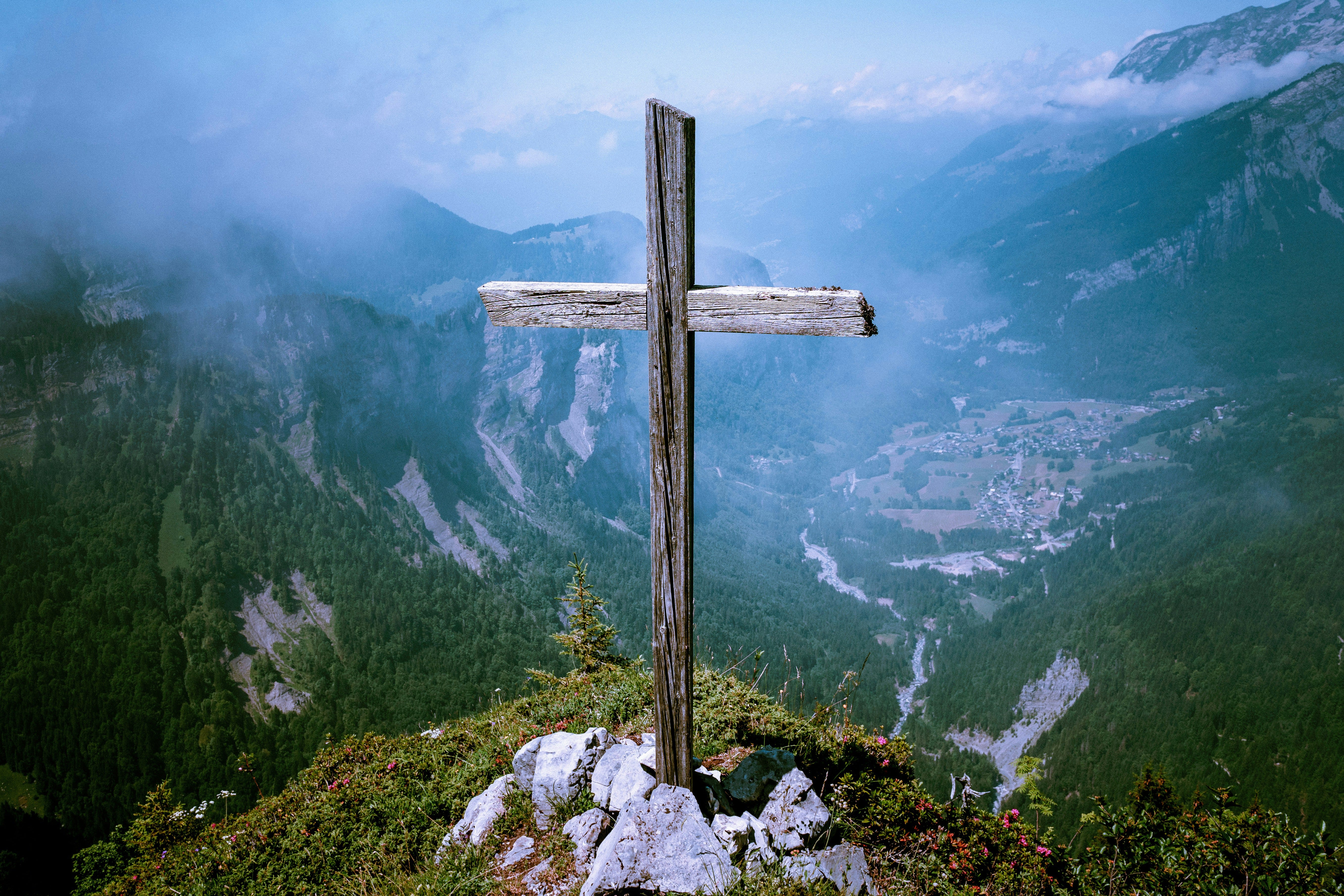
Again, this is a HUGE topic so I need to carefully limit myself to how the christian mindset was responsible and led to these invasions and seizures of lands formerly owned and claimed by Indigenous Peoples.
The christian mindset did not all of a sudden come into being. Like all systems of religious thought, it changed and evolved over time. And it incorporated elements of other beliefs in order to more easily convert other people to believe in it.
First and foremost, it was derived from the Hebraic religion which grew out of the assertion that there is only one true G-d, and all other culture’s gods are pagan, heretical and false.
I find it very interesting that even though the Hebrew people firmly believed and asserted this founding principle of one omniscient, omnipotent G-d, they never forced any other people to convert to this belief.
In fact, just the opposite.
If you want to convert to Judaism, you have to submit to at least 2 rejections before a Rabbi will actually affirm your 3rd request. You have to really be committed and convince them that you are not just doing this on the spur of the moment.
Think how different this is from the Christian Crusades where armies of believers were sent to acquire lands and convert the pagans and heretics (peoples) who lived on them by force.
So the practice of using force to acquire territories from non-christian peoples had been used several centuries before Christians sailed across the Atlantic and began claiming lands for their nations back home in Europe.
So that gives us another piece of the colonization puzzle.
Let’s get back to terra nullius, which also underlay those efforts.
Finders Keepers
It turns out that terra nullius is thought to have been derived directly from another Roman Law concept called res nullius. which means
“…things belonging to no one"; that is, property not yet the object of rights of any specific subject. A person can assume ownership of res nullius simply by taking possession of it…
Examples of res nullius are wild animals (ferae naturae) or abandoned property (res derelictae). Finding can also be a means of occupatio (i.e. vesting ownership), since a thing completely lost or abandoned is res nullius, and therefore belonged to the first taker. Specific legislation may be made, e.g. for beachcombing.
So we’re back to “finders keepers”
These concepts were used as the founding principles of empire building and colonization by the early European Nations (England, Spain, France), especially res nullius. In Benton’s article they quote a primary source, (Anthony Pagden, Lords of All the World: Ideologies of Empire in Spain, Britain and France, C.1500-C.1800 (New Haven, Conn.: Yale University Press, 1995)).
Here’s the quote: (bolding mine)
"[T]he British, and to a somewhat lesser degree the French, were driven to legitimize their settlements in terms of one or another variant on the Roman law argument known as res nullius. This maintained that all 'empty things,' which included unoccupied lands, remained the common property of all mankind until they were put to some, generally agricultural, use. The first person to use the land in this way became its owner.”
unoccupied lands were common property to all mankind until they were put to some use, generally agriculture.
And since the Indigenous Peoples whose lands they were claiming were not farmers or industrialists, they had no legal claim to their land. Especially since they had no formal legal systems with a written code of laws.
But really, all that was a way of justifying their real goals, which was to build and increase their empires. And if they didn’t have to go to war to claim more lands and resources for their Crowns and countries, so much the better.
To quote Thom Hartmann
“We think of our “western” civilization as having a democratic heritage, but that’s a mirage. For most of these thousands of years, kings, emperors, Caesars, popes, and warlords have ruled the lives of ordinary people.”
When I really think about that and why that is the case I can only come up with one simple reason; a rare few numbers of men (and it is mostly men) feel the need to become immensely powerful and dominate and rule other men. It doesn’t matter what the reason is; acquiring wealth, property, slaves, political power - it’s just the need to dominate and rule the lives of people and once that need starts to manifest, it’s intoxicating. Nothing else matters.
And in order to make it seem like it’s the way it should be - that their actions are ordained and justifiable - laws and philosophical arguments are enacted to make it so.
Think about it. How did the Romans come up with these concepts? And when?
There is still much debate and fascinating mythology about the details of how Rome was founded by Romulus, a son of a vestal virgin and the god, Mars.
But one thing is for sure, and that is that Romulus was real, did build the city, was its king, ruled from 753 - 716 B.C.E, and did create the original Roman system of jurisprudence from which terra nullius and res nullius were ultimately derived.
The origin or original application of these concepts is not what concerns me now.
What is relevant to our discussion of settler occupation, conquest and colonization is that the terra nullius and res nullius legal concepts were often used to justify the taking of land from Indigenous Peoples and claiming it as Crown land, belonging to one of the European nations whose explorers first landed upon it.
And think about this; the amount of time elapsed from 753 B.C.E to 1492 C.E. is more than 2,200 years. So these concepts have been percolating deep down inside our subconscious minds for a couple thousand years.
For most of these thousands of years, kings, emperors, Caesars, popes, and warlords have ruled the lives of ordinary people.”
I’d say that’s certainly long enough to have them become part of our unconscious prejudices and biases.
We don’t consciously think about them, they’re just there.
And they manifest in ways we are totally unaware of.
And in ways we are totally aware of!
Like, I don’t know about you but I totally loved the Game of Thrones series and that’s all about rooting for the good kings and queens.
How can that be?
Like I said, part of my unconscious bias.
That’s Not OK!
If you’re on the same page that I’m on, then you know that is simply not ok.
Given the origins of terra nullius and res nullius and using them as the legal justification for laying claim to and colonizing lands already occupied by other peoples is, in my opinion, highly questionable.
Essentially what we do when we affirm these 2 concepts is to continue our acceptance of using force and feelings of superiority as justifications for seizing territory from its occupants.
It is the one theme that underwrites ALL of the history of European and Asian wars. Our gods told us we’re better than you so we’re going to conquer and subjugate you and take ownership of your lands.
Unfortunately, some people still think it’s a valid argument.
Just look at all the wars still being fought on this planet.
But I say we have to do better than that.
Because essentially these 2 concepts legalizes theft.
If your people have stolen something from other people, it doesn’t matter if it was through war, conquest, simple theft, broken treaties, or how long ago the theft occurred.
Ultimately, it should be restored to its previous owners.
If for some valid reason(s), that’s not entirely possible, some form of reasonable compensation should be given to the people upon whom the theft was perpetrated.
And in our current era, these people also need to be included in determining how these items and lands should be treated in the future.
Land Back! is one good place to start.
UNDRIP, the United Nations Declaration of the Rights of Indigenous Peoples is another.
And there are so many more.
If you truly want to maintain your personal integrity and respect for Indigenous peoples, then,
It is always best to work from a position of highest respect for their cultures and nations.
Especially when Indigenous ways of seeing the world are so radically different from how the colonizers saw it and how we settler descendants still view it.
One example.
On Turtle Island (what we settlers call North America), the Indigenous Peoples had no concept of personal property or land ownership; the waters and lands and creatures, including themselves, were all connected to each other and needed each other to survive in a sustainable and good way.
How could you “own” any of that?!
If your acting in everyone’s best interests, then the best you can do is learn how to be good stewards.
That’s where we need to get to if we really respect and support true reconciliation.
That’s the good road we need to start travelling down.
One step at a time.
Until next time,
Peace be with you.
Rich
Sources:
Wikipedia: Terra Nullius, Res Nullius, Roman Law, Romulus
“Acquiring Empire by Law: From Roman Doctrine to Early Modern European Practice”, by Lauren Benton and Benjamin Straumann in Law and History Review, (Feb 2010)
“Have We Reached the Point Where Corporatism is Triumphing Over Democracy?” by Thom Hartmann, in The Hartmann Report, (Feb 27, 2024)